
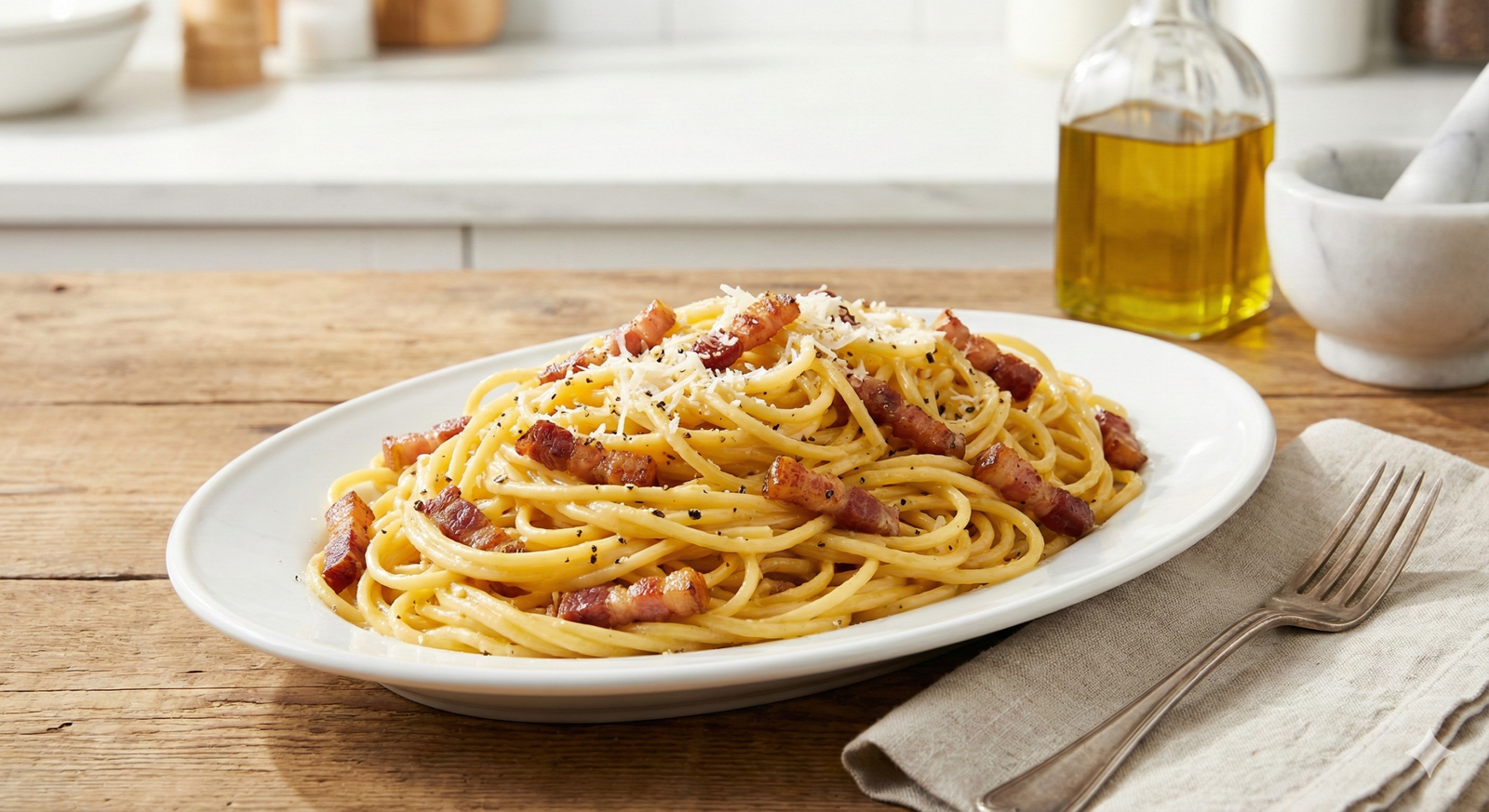
Here is the authentic recipe for Roman Spaghetti Carbonara, written to help your readers master this classic Italian technique.
Introduction
Let’s set the record straight: true, authentic Roman Carbonara does not contain a single drop of cream. If you have only ever had the heavy, cream-laden cafeteria version, prepare for a revelation. The rich, velvety “sauce” in a real Carbonara is created through a bit of culinary magic—an emulsion formed by tossing hot pasta, rendered pork fat, eggs, and cheese with starchy pasta water.1 The result is a glossy, golden coating that is intensely savory, silky, and perfumed with the sharp bite of black pepper. It is simple, elegant, and one of the most satisfying things you will ever cook.
Key Stats
- Prep Time: 10 minutes
- Cook Time: 15 minutes
- Total Time: 25 minutes
- Number of Servings: 4
Ingredients
- 1 lb (16 oz) high-quality Spaghetti or Rigatoni
- 6 oz Guanciale (cured pork jowl) or thick-cut Pancetta, cubed
- 3 large eggs, room temperature
- 1 large egg yolk (for extra richness)
- 1 cup Pecorino Romano cheese, freshly grated (you can use a mix of Pecorino and Parmigiano Reggiano if you prefer a milder flavor)
- Freshly cracked black pepper (coarse grind is best)
- Salt (for the pasta water)
Directions
- Get the Water Ready:Bring a large pot of salted water to a boil. (Use slightly less water than usual to concentrate the starch—this helps the sauce emulsify later). Add the pasta and cook until al dente—it should still have a firm bite in the center.
- Render the Pork:While the water heats, place the cubed Guanciale (or Pancetta) in a large, cold skillet. Turn the heat to medium and let the fat render out slowly. Cook until the meat is golden brown and crispy, about 8–10 minutes. Remove the pan from the heat. Optional: Remove a spoonful of the crispy meat to use as a garnish later.
- Make the “Carbocrema”:In a medium bowl, whisk together the whole eggs, the extra yolk, and the grated Pecorino Romano. Add a very generous amount of freshly cracked black pepper. Whisk until you have a thick, yellow paste.
- Toss and Coat:Using tongs, transfer the cooked hot pasta directly into the skillet with the rendered pork fat (do not drain the pasta in a colander!). Toss vigorously over low heat for 1 minute so every strand is coated in the flavorful fat.
- The Emulsion (The Critical Step):Turn the heat off completely. Move the skillet to a cool burner or a wooden board. Pour the egg and cheese mixture over the pasta. immediately begin tossing and stirring quickly. As you toss, add a splash (about 1/4 to 1/2 cup) of the hot, starchy pasta water. The residual heat of the pasta will cook the eggs gently, creating a creamy, glossy sauce without scrambling them. Keep adding small splashes of pasta water until the sauce reaches your desired consistency. Serve immediately.
Chef’s Tips
- Temperature Control: The biggest mistake people make is adding the eggs while the pan is still on the flame. This results in “scrambled eggs with noodles.” You must remove the pan from the heat before adding the egg mixture. The heat from the pasta itself is enough to pasteurize the eggs and thicken the sauce.
- “Liquid Gold”: Before you even think about draining your pasta, scoop out a mug full of the boiling water. This cloudy, starchy water is the glue that binds the oil and cheese together into a creamy emulsion. Without it, your sauce will be dry and clumpy.
- Ingredient Quality: Please, put down the green shaker can. Pre-grated cheese is coated in anti-caking agents (like cellulose) that prevent it from melting into a smooth sauce.2 Buy a block of real Pecorino Romano and grate it yourself right before cooking. The difference in texture is night and day.

Leave a Reply